

A radiator hose fails by getting soft, cracked, or bulged — then splitting when heat and pressure peak. Radiator hose replacement stops that leak before the engine overheats. Upper and lower radiator hoses, and sometimes heater hoses, harden with age. Heat, oil contamination, and tired clamps speed it up.
If the temperature gauge is climbing, you smell coolant, or you already see a wet hose end, have the cooling system inspected. Call (972) 422-1130 or use the contact page to schedule.
Signs a radiator hose needs replacement
- Soft, spongy sections or ballooned bulges
- Cracks near the clamps
- Oil-soaked rubber that is swelling
- Coolant residue or white crust at hose ends
- Steam or sudden coolant loss after a hose rupture
- A lower hose that collapses under load and restricts flow even without a puddle
Hoses that still look intact on the outside can be weak inside. Squeeze along the length, not just at the clamp. A hose that feels mushy or stays collapsed after you let go is due.
Do not open a hot radiator cap to “check the hose.” Let the engine cool. A burst at idle in traffic dumps coolant fast; the gauge can climb in minutes. If you already overheated, tell the shop — that changes what else we inspect besides the rubber.
Heat cycles in stop-and-go driving are hard on the upper hose especially. The lower hose lives with pump suction. Either end can fail first. Age is a better predictor than mileage alone if the vehicle sits in the sun or the coolant was neglected.
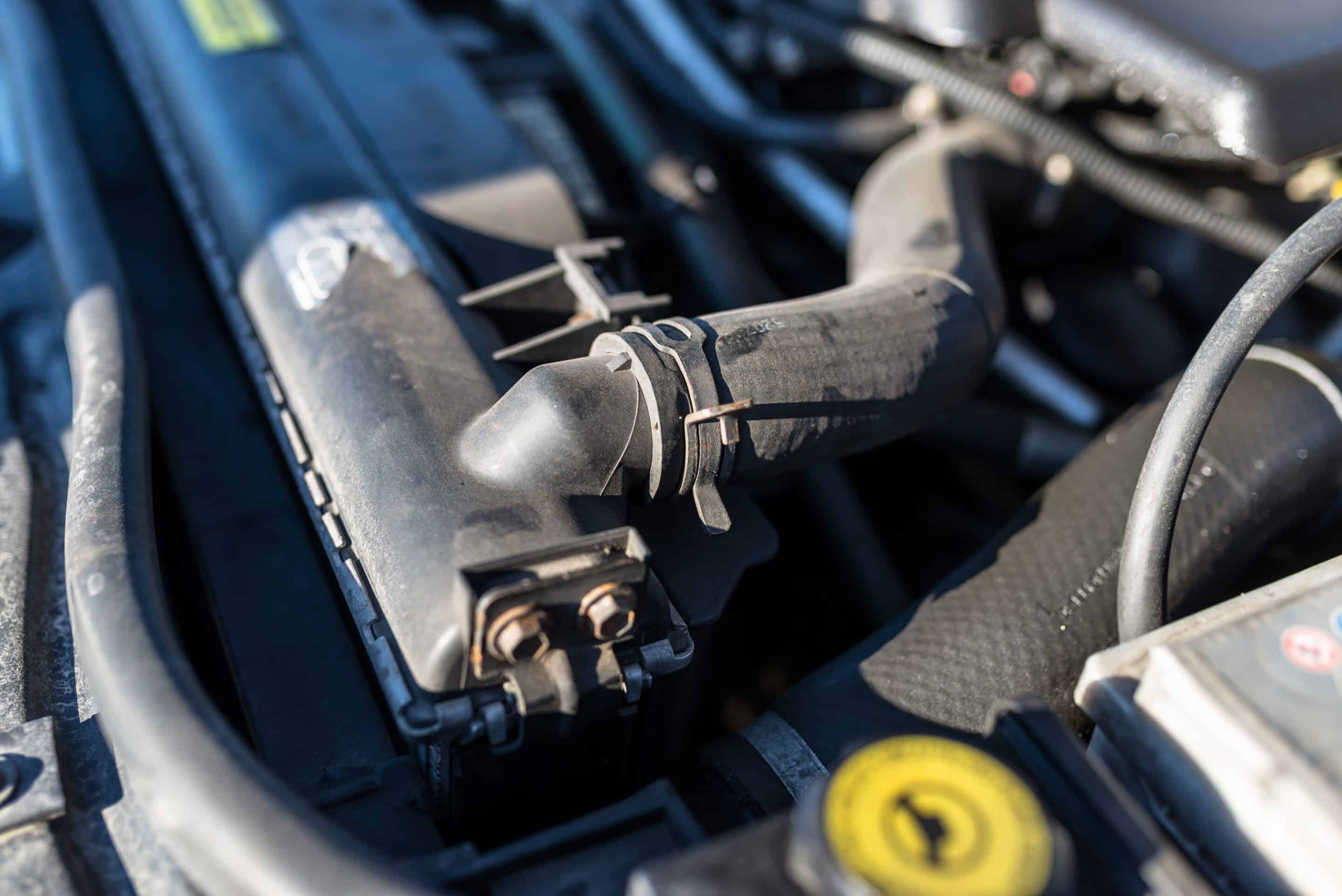
What replacement includes
We replace the failed hose with the correct molded shape when that is what the vehicle uses. Molded hose follows the original routing and is less likely to kink than a cut length of universal hose. Universal hose still has a place on some older or odd routing jobs, but it is not the default.
A typical job:
- Inspect upper and lower radiator hoses, heater hoses when relevant, and clamps
- Check radiator necks and thermostat-housing outlets for corrosion that prevents a seal
- Drain and capture coolant
- Install the new hose and new clamps when the old ones have lost tension or cut into rubber
- Refill with the correct coolant type and bleed air
- Pressure-test the joints before the vehicle leaves
If coolant is rusty, mixed, or overdue, we will say so while the system is open. Fresh hoses on dirty coolant is a half repair. Related cooling work: radiator leak repair, thermostat replacement, water pump replacement, and radiator service.
A hose job does not automatically mean the radiator is finished. We look at the tanks, the cap, and whether the fan is actually pulling air. If the leak was only rubber, we stop there. If the neck is crumbling, the hose will not save it.
When to replace hoses as a pair
If both upper and lower hoses are original and aged, replacing them together while the system is already drained is usually the smarter shop visit. The same is true when a thermostat or radiator is already coming off. Leaving a 10-year-old mate on the other neck is how a second mess shows up a month later.
Frequently asked questions
Should upper and lower hoses be replaced together?
When both are original and aged, yes — while the system is drained. If one hose was replaced recently and the other is still sound, we will say so.
Can I use universal hose?
Sometimes. Molded hoses that match the original shape usually fit and flow better. We use the style that actually matches the vehicle, not whatever is cheapest on the wall.
How long does radiator hose replacement take?
Many hose jobs finish the same day when the correct molded hose is in stock and the necks are clean. Seized clamps, a corroded radiator outlet, or a hose that has to be ordered can push the work to the next business day.
How often should hoses be replaced?
There is no single mileage for every vehicle. Inspect them at cooling-system service. Replace when they are aged, soft, cracked, oil-soaked, or leaking.
Can a hose cause overheating without a visible leak?
Yes. A collapsing lower hose can starve the water pump of flow. That is why we check hose condition, not only wet spots on the ground.
Do you reuse old clamps?
We replace clamps that are weak, distorted, or cutting into the hose. A new hose on a bad clamp is a leak waiting on the first heat cycle.
What if the hose burst on the road?
Stop safely, let it cool, and do not keep driving if the gauge is in the red. Once the vehicle is here we replace the hose, check for heat damage, and pressure-test so a second leak is not hiding at the radiator or water pump.
Schedule hose inspection
If a hose is soft, bulged, or already wet, do not wait for a roadside burst. Call (972) 422-1130 or use the contact page. Bring notes on when the symptom started and any recent cooling work — that history shortens time in the bay.
Reviewed by the ASE-certified technicians at Bill’s Radiator and Muffler. Cooling-system and exhaust repairs are diagnosed in the shop bay. This article was updated 6 October 2026.